


Castors let equipment move, while leveling feet keep it still, level and stable. The right choice depends on how often the equipment must be moved, how precisely it must stand and how the area is cleaned. In many food plants the answer is a combination, for example leveling castors that roll during cleaning and stand firmly during production.
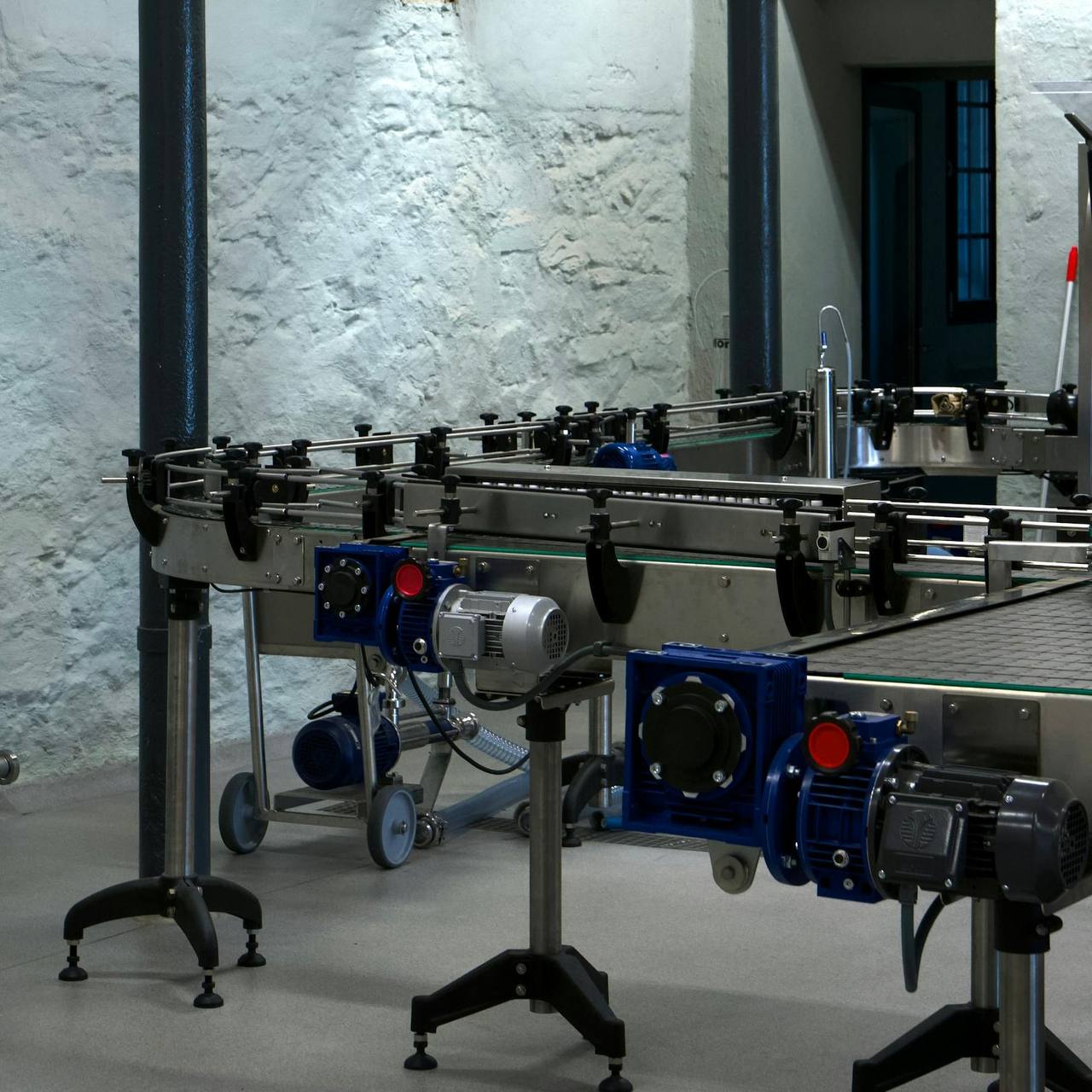
When castors make sense
Castors are the obvious choice for equipment that changes position often. Typical examples are trolleys, mobile tables, bins and small machines that are moved aside for cleaning. In hygienic environments the castor must withstand water and detergents, which points towards stainless steel housings, sealed wheel bearings and wheel materials that do not absorb moisture or mark the floor.
When leveling feet make sense
Machines that must stand precisely, carry heavy loads or vibrate during operation belong on leveling feet. Feet compensate for sloping floors, keep the machine level so product flows correctly, and transfer the load directly to the floor. Hygienic versions avoid exposed threads and seal against the floor so that no gaps collect dirt.
The middle ground: leveling castors
A leveling castor combines a wheel with an integrated foot. The equipment can be rolled into position and then lowered onto the foot, which takes the load and holds the position. This is useful for equipment that is moved for cleaning or changeovers but must stand firmly while running. A detailed comparison of industrial casters vs leveling feet shows where each solution performs best.
Questions that decide the choice
- How often is the equipment moved? Daily movement favours castors or leveling castors; rare movement favours feet.
- Does it vibrate? Vibrating machines on castors tend to creep, so feet or locking solutions are safer.
- What is the load? Heavy machines need feet or high-capacity castors with suitable floor conditions.
- How is the area cleaned? Washdown calls for sealed, corrosion-resistant designs without crevices.
- Is the floor sloped or uneven? Feet compensate for slopes, castors do not.
Safety aspects
Equipment that rolls unintentionally is a real risk on wet floors. Castors should have reliable brakes or locks, and staff should know how to secure equipment before work starts. On the other hand, heavy machines that must be moved without castors often require lifting equipment, which introduces other risks. Matching the solution to the actual handling reduces both.
Hygiene and documentation
Castors and feet sit at floor level, which is often the dirtiest part of a production area. Hygienic geometry, approved materials and documentation therefore matter as much here as in product contact zones. It is worth reviewing NHK’s food-contact certifications to see which documents can support the choice in an audit.
Wheel materials and floors
The wheel material affects rolling resistance, floor protection and hygiene. Polyurethane rolls easily and carries high loads, elastic rubber is quiet and gentle on floors, and nylon resists chemicals but can be noisy on hard floors. In food plants, wheels should not absorb water or leave marks, and they should tolerate the cleaning agents in use. Check the floor too: drains, joints and slopes all influence how easily equipment moves and how safely it stays in place once positioned.
Frequently asked questions
Can castors be cleaned with high-pressure water?
Only if they are designed for it. Sealed bearings and corrosion-resistant materials are essential, otherwise water will wash out the lubricant.
Do leveling castors carry as much load as feet?
When lowered, the foot carries the load, but the rated capacity depends on the design. Check the datasheet for both rolling and standing loads.
Which wheel material is best for food plants?
Non-marking, moisture-resistant materials such as polyurethane or elastic rubber compounds are common choices.
Summary
Use castors for mobility, feet for stability and leveling castors when you need both. Then choose designs that can be cleaned as thoroughly as the rest of the line.